Trades · costs reviewed July 2026
HVAC Training Cost (2026): All-In Price, Time & HVAC Pay
What HVAC training really costs: community college fast-track vs private trade school, the EPA 608 certification fee, and what HVAC techs actually earn.
Jump to the estimator
Cost-to-become estimator: HVAC Technician
Pick your path and region. The all-in total, timeline, and payoff update as you go. No email, no quote form.
Estimated all-in cost
– –
How this estimate is built
Costs reviewed July 2026. Your real cost will vary by school, state, and program.
What's in the all-in number
| Item | Low | High |
|---|---|---|
| Tuition / program (community college fast-track or private trade school program) | $4,500 | $23,825 |
| Books, materials & supplies | $0 | $1,800 |
| Exam & license/certification fees | $27 | $160 |
| All-in total | $4,527 | $25,785 |
Base national range before the estimator's region and path adjustments. Reviewed July 2026.
Salary & payoff
Median annual pay
$61,010
Entry-level pay
$40,050
Payback on the typical all-in cost
~3 months
Source: U.S. Bureau of Labor Statistics, Occupational Employment and Wage Statistics, 49-9021 Heating, Air Conditioning, and Refrigeration Mechanics and Installers.
The legally required credential to work on air conditioning costs about $27. Everything else is optional, and one private school will happily sell you $23,825 of it.
The one thing you legally need
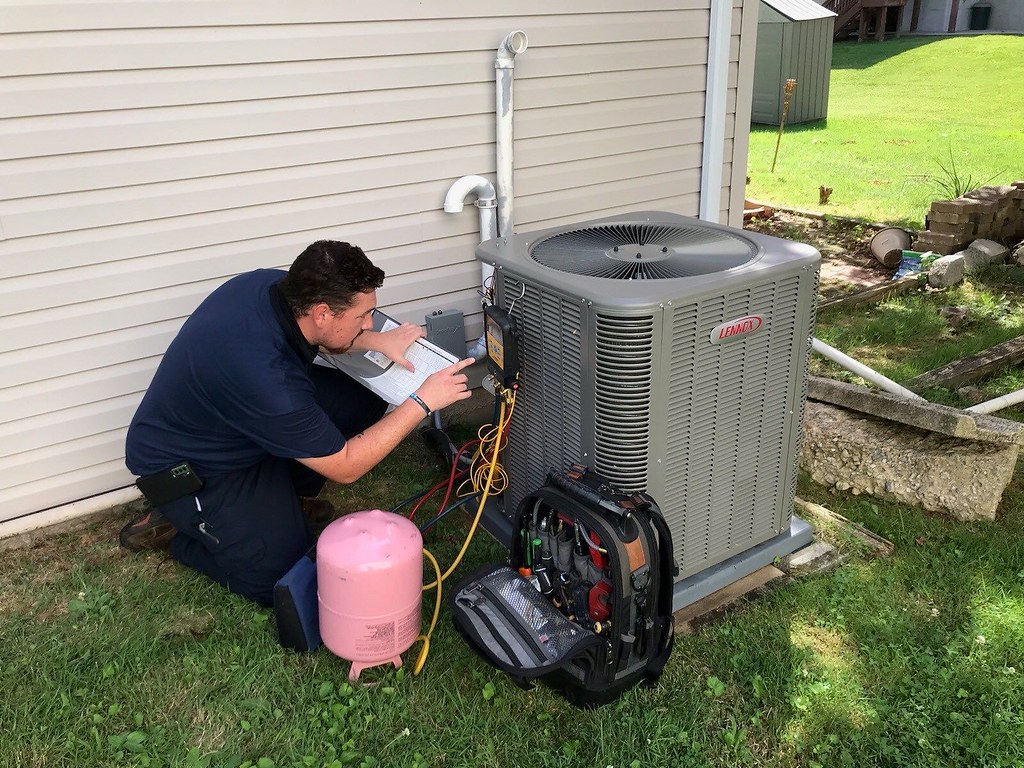
Federal law requires certification to purchase or handle refrigerant, and that’s the EPA Section 608 card. It’s the only hard credential gate in this trade, so it’s worth understanding exactly what it costs and who sells it.
The EPA itself doesn’t issue the card and doesn’t set a price. Its own page says so directly: EPA does not issue certification cards. Instead it approves certifying organizations, and those organizations price the exam. Mainstream Engineering, one of them, charges $26.95 for a Type I open-book exam and $7.95 for each additional attempt, wallet card included. The higher tiers (Type II, Type III, and Universal, which covers everything) cost more, commonly quoted between $60 and $160, though we couldn’t confirm a specific figure from a certifying body’s own page for this review and would rather say so than print a number we didn’t read.
Type I covers small appliances. Universal covers the whole trade and is what most working techs carry. Either way, the card is a rounding error against tuition, which tells you something about where the industry’s money is actually made.
Where the actual money goes
Bevill State Community College in Alabama runs an HVAC Fast Track for $4,500 over 11 weeks, and its own page states the program is free to WIOA-approved participants. GateWay Community College in Arizona lists a residential HVAC certificate at an estimated $5,330 including tuition, lab, and book fees.
Refrigeration School, Inc. in Phoenix lists Refrigeration Technologies at $23,825 total: $18,400 tuition plus a $1,800 gear package, 600 contact hours, finishing in 6 to 10 months. Its Electro-Mechanical Technologies program is $28,025 over 9 to 14 months.
So the real spread is $4,500 to $23,825 for entry into a trade with a $61,010 median. The private program is longer and more thorough, and for someone who wants a broad electro-mechanical foundation rather than the fastest route to a service van, that has genuine value. But an 11-week fast track that’s free if you qualify for WIOA, against a 10-month program costing more than a third of your first-year salary, is not a close call for most people. Check your WIOA eligibility before you sign anything. It takes one phone call to an American Job Center.
The route that costs nothing
HVAC has a quiet third path that no school’s landing page mentions: get hired as a helper. Shops are chronically short-handed, plenty will take someone with no certificate who shows up on time and can carry equipment, and they’ll buy your EPA card and train you on the van once you’ve proven you’ll stay.
It’s slower and messier than school. You learn whatever your shop happens to do rather than a syllabus, there’s no credential at the end to wave at the next employer, and a bad shop will keep you carrying equipment for two years without teaching you anything. Ask directly, in the interview, who trains you and how fast helpers move up. But it costs nothing, it pays from the first week, and in a trade this short on labor, it’s a real door.
What the trade actually pays
The Bureau of Labor Statistics puts the May 2025 median annual wage for HVAC mechanics and installers at $61,010. The lowest-paid tenth earn under $40,050 and the top tenth clear $95,210. That’s a wide spread, and it tracks commercial work, refrigeration specialty, and overtime more than it tracks which school you attended.
Growth is 8% from 2024 to 2034, faster than the average for all jobs, with about 40,100 openings a year. The demand is structural rather than trendy: buildings need conditioning, equipment fails, and the work can’t be offshored or done by software.
That healthy outlook is exactly why the expensive programs advertise so hard, and exactly why you shouldn’t overpay. A $61,010 median is a good living. It’s a good living whether you entered the trade through an $4,500 fast track, a free WIOA seat, or a helper job that paid you from day one. The credential that gates the work costs $27.
Compare training paths
The cheapest path is rarely the one that advertises the most. Community college, apprenticeship, and employer-sponsored routes usually cost less than a private program covering the same license or certification.
| Path | Cost | Time | Tradeoff |
|---|---|---|---|
| Community college / fast-track program Lower cost | $4,500–$5,330 | 3–7 mo | Bevill State Community College (AL) runs an HVAC Fast Track for $4,500 over 11 weeks, and states it is free to WIOA-approved participants. GateWay Community College (AZ) lists a Residential HVAC certificate at an estimated $5,330 including tuition, lab, and book fees. |
| Private HVAC trade school | $18,400–$28,025 | 6–14 mo | Refrigeration School Inc. (Phoenix) lists Refrigeration Technologies at $23,825 total (tuition $18,400 + $1,800 gear package) over 600 contact hours and 6-10 months. Its broader Electro-Mechanical program is $28,025 over 9-14 months. |
| Employer-sponsored / helper-to-tech Lower cost | $0–$500 | 12–36 mo | Plenty of shops hire helpers with no certificate and pay for the EPA card and further training once you've proven you show up. Slower and less structured than school, and it depends entirely on landing a shop willing to teach. Costs close to nothing and pays from week one. |
Paying for it
Grants, sponsorship & free paths
- WIOA workforce grant. Bevill State's own page states its HVAC Fast Track is free to WIOA-approved participants, which is the clearest example in this niche of a real program going to zero for eligible students. Apply through your local American Job Center before paying anyone's deposit. Details.
- Employer-paid EPA certification. The EPA 608 card is cheap enough that many shops simply buy it for a helper they want to keep. If you're already working somewhere with a service department, ask before you pay for it yourself.
- VA benefits. GI Bill benefits cover approved HVAC programs and registered apprenticeships. Approval is per-program, so confirm the specific school with the VA rather than assuming. Details.
Financing (last resort, not the default)
Loans are the most expensive way to pay for HVAC Technician training. Check every grant and sponsorship option above first, and don't borrow more than your first year's expected pay.
- Private school financing. Private HVAC schools run payment plans on totals near $24,000. Price the community college fast-track and check WIOA eligibility first. The trade pays well, but it pays the same whether you spent $4,500 or $24,000 to enter it.
Compare HVAC Technician programs
We're not routing this career to a specific school or lead program yet. Use the cost breakdown and path comparison above to shortlist a program near you, then compare their quote against the numbers on this page before you commit.