Transport · costs reviewed July 2026
Private Pilot License Cost (2026): The Real All-In Total
The real all-in cost of a Private Pilot License: aircraft rental, instructor time, ground school, the FAA knowledge test, and the checkride hours schools skip.
Jump to the estimator
Cost-to-become estimator: Private Pilot
Pick your path and region. The all-in total, timeline, and payoff update as you go. No email, no quote form.
Estimated all-in cost
– –
How this estimate is built
Costs reviewed July 2026. Your real cost will vary by school, state, and program.
What's in the all-in number
| Item | Low | High |
|---|---|---|
| Tuition / program (Part 61 or Part 141 flight school program) | $10,000 | $20,000 |
| Books, materials & supplies | $250 | $500 |
| Exam & license/certification fees | $700 | $1,500 |
| All-in total | $10,950 | $22,000 |
Base national range before the estimator's region and path adjustments. Reviewed July 2026.
Salary & payoff
We haven't verified a current BLS salary figure for Private Pilot yet. Check the Bureau of Labor Statistics Occupational Outlook Handbook directly before treating any online salary claim as current.
Ask five flight schools what a Private Pilot License costs and you’ll get five different numbers, all lower than what you’ll actually spend. The gap isn’t dishonesty so much as an FAA minimum that almost nobody actually hits.
The number behind the number
The FAA requires a minimum of 35 to 40 flight hours to qualify for a Private Pilot License. Most students need 60 to 75 hours to actually pass their checkride, because real students miss lessons, fly in bad weather, and need more practice on landings than the syllabus assumes. A flight school quoting “$10,000 to get your PPL” is often quoting the 40-hour floor. Budget around the realistic 60-to-75-hour range instead, which puts most students closer to $15,000 to $20,000 all-in.
Where the money actually goes
Aircraft rental runs $160 to $220 an hour, and at 65 hours that’s $10,400 to $14,300 by itself, before an instructor ever gets involved. Instructor time for dual instruction runs $60 to $90 an hour, adding roughly $3,900 to $5,800 across the flight hours that require an instructor in the seat. Ground school, either in a classroom or self-paced online, runs $300 to $500. Add a headset, charts, and other flight gear at $250 to $500, plus a required third-class medical exam, which runs $75 to $160 depending on the individual Aviation Medical Examiner (AME) and any extended evaluation needed.
That third-class medical is worth understanding beyond the price tag. It’s valid for 60 months if you’re under 40 when examined, and only 24 months if you’re 40 or older, so an older student who trains slowly can end up paying for a second exam mid-training. A cheaper alternative called BasicMed exists, but it doesn’t help a first-time student: BasicMed only applies to pilots who have already held a standard FAA medical certificate issued after July 14, 2006, and it lets that pilot substitute a regular physical with their own doctor plus a free online course every 24 months, instead of returning to an AME. It matters for the years after this certificate, not for earning it.
Then there’s the testing itself, which flight schools rarely fold into their advertised price: the FAA knowledge test costs about $175 through PSI, the FAA’s testing vendor, and the checkride with a Designated Pilot Examiner runs $600 to $1,300, most commonly $600 to $900.
Part 61 versus Part 141
Part 61 is the a la carte path: pay per flight hour and lesson, on your own schedule, with whatever instructor is available. It’s flexible but vulnerable to skill fade if you can’t fly consistently, which drags out both the calendar time and the total hours needed. Part 141 is a structured, FAA-approved syllabus, usually faster to finish because the curriculum is fixed, and usually a little more expensive for the same certificate. Neither path is free, and no reliable civilian route exists that gets you a PPL for nothing the way employer-sponsored CDL training does.
Veterans have one real alternative: GI Bill benefits can fund flight training at approved Part 141 schools. Coverage terms vary by school and by individual eligibility, so confirm directly with the VA rather than trusting a flight school’s marketing claim about what the GI Bill covers.
One more thing worth knowing before committing $15,000 to $20,000: none of it gets you paid to fly. A Private Pilot License covers personal, non-compensated flying only. Turning that into income takes a Commercial Pilot Certificate on top, with more hours and more cost layered on. The salary numbers you’ll see quoted for commercial and airline pilots describe that further step, not the PPL by itself.
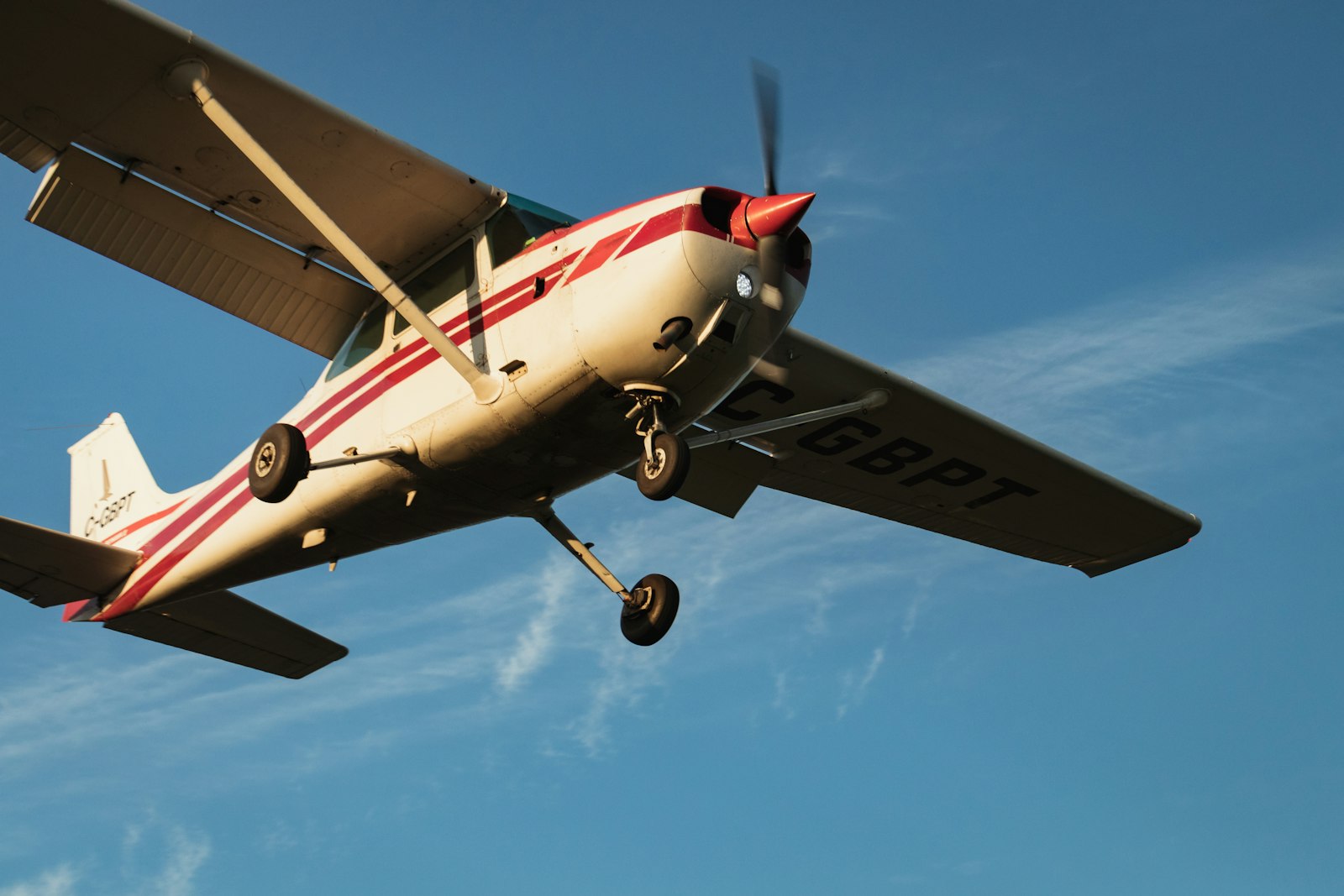
What it actually takes to get paid to fly
A Commercial Pilot Certificate requires a candidate to already hold a Private Pilot License, be at least 18, pass a second-class medical exam, and log 250 total flight hours, including at least 100 hours as pilot in command, 50 hours of cross-country flying, and 10 hours of instrument training, on top of everything already logged for the PPL. In practice, most people close that gap by earning a Certified Flight Instructor (CFI) rating next, since teaching student pilots is the most common, and often the only paid, way to accumulate hours before an airline will look at an application. CFI training itself typically adds another $6,500 to $8,000.
Airlines require a still-higher bar: an Airline Transport Pilot (ATP) certificate needs 1,500 total flight hours, more than five times what the Commercial certificate requires. Building that gap between 250 and 1,500 hours, commonly called time-building, usually takes one to three years, most often spent instructing, flying charter, or doing aerial survey and pipeline-patrol work, jobs that exist mainly because they let a low-time commercial pilot log hours while getting paid something. Added up, going from zero flight experience to airline-ready typically runs $81,000 to $143,000 total, with most sources landing on a realistic $110,000 to $120,000 estimate across PPL, instrument rating, commercial certificate, and CFI training combined. The Private Pilot License this page prices out is genuinely just the first and cheapest step of that ladder, not a scaled-down version of it.
Compare training paths
The cheapest path is rarely the one that advertises the most. Community college, apprenticeship, and employer-sponsored routes usually cost less than a private program covering the same license or certification.
| Path | Cost | Time | Tradeoff |
|---|---|---|---|
| Part 61 flight school (a la carte) | $10,000–$20,000 | 3–12 mo | Pay per flight hour and instructor session. Flexible schedule, but total cost climbs if lessons are infrequent (skill fade means re-learning between sessions). |
| Part 141 structured program | $12,000–$22,000 | 2–6 mo | FAA-approved structured syllabus, often faster to finish since it's designed around a set curriculum. Usually costs slightly more than Part 61 for the same license. |
| College aviation degree program (Title IV aid eligible) Lower cost | $15,000–$25,000 | 12–24 mo | Bundled into a 2-4 year aviation degree. Eligible for federal financial aid (loans, grants) unlike a la carte flight training, but takes far longer and costs more overall than the license alone. |
Paying for it
Grants, sponsorship & free paths
- VA benefits (GI Bill). Can fund flight training at FAA-approved Part 141 schools for eligible veterans. Coverage amount and approved-school list vary; confirm directly with the VA and the specific school before enrolling. Details.
- College aviation degree federal aid. A 2- or 4-year aviation degree program bundling flight training is eligible for Title IV federal financial aid (loans, Pell grants) in a way that a la carte flight training at an independent school is not. Costs more and takes longer, but opens up federal aid as an option.
Financing (last resort, not the default)
Loans are the most expensive way to pay for Private Pilot training. Check every grant and sponsorship option above first, and don't borrow more than your first year's expected pay.
- Flight school financing. Most flight schools offer in-house payment plans; private aviation-training lenders also serve this market. This is the most expensive way to pay for a license this site tracks. Confirm the real interest rate before committing, and don't borrow more than you can pay back on a first-year salary in the aviation career you're actually targeting.
Compare Private Pilot programs
We're not routing this career to a specific school or lead program yet. Use the cost breakdown and path comparison above to shortlist a program near you, then compare their quote against the numbers on this page before you commit.